 Family Reunion Articles
All articles · Backyard & Home
How to Host a 2.5-Hour Coffee and Dessert Family Catch-Up
A short afternoon of coffee, dessert and real conversation: a timed plan, a checklist, and cleanup small enough that the host gets to sit down.
by Ian · 5 min read
The short version
Not every family get-together needs a whole day. A short afternoon with coffee and dessert can be the one people actually make it to.
- Set a clear window, like 2:00 to 4:30, so busy relatives can say yes.
- Put chairs in small circles, not one long row, so people can hear each other.
- Ask each household to bring one dessert and label it: nuts, gluten-free, vegetarian.
Keep the cups, the plates and the plan simple, and spend the time talking.
This guide is for the relative who wants to see everyone but can't ask the family for a whole Saturday. You'll get a two-and-a-half-hour plan for coffee, dessert and catching up, with a checklist, a timed run of show, and ways to keep cleanup small enough that you get to sit down too.
A short window works because it's easy to say yes to. People can come after a game, before a shift, or between a nap and dinner, and nobody gets worn out.
Best for
- Group size: 8 to 30 people. Past that, you'll want a second room or the yard.
- Energy level: low and relaxed. It's mostly sitting and talking.
- Prep effort: light. One afternoon of setup, most of it the day before.
- Budget level: low. Coffee, tea, a few store-bought treats and whatever relatives bring.
- Ages it suits: everyone, and it's especially good for older relatives who tire at long events and for families with babies on a nap schedule.
Before the day
Three weeks is plenty of lead time for an afternoon this short. Most of the work is picking the day, getting the end time into the invite, and finding out who's bringing what.
- 3 weeks out: pick two or three possible afternoons and ask the family which one works. Set a clear start and end time, like 2:00 to 4:30.
- 2 weeks out: send the invite with the end time in it. Saying when it ends is what makes it easy for busy people to come.
- 10 days out: ask each household to bring one dessert or a bowl of fruit, and to tell you what it is. That way you don't end up with six pans of brownies.
- 1 week out: ask about diets and allergies. Note who needs gluten-free, vegetarian or nut-free choices, and who skips caffeine.
- 3 days out: count chairs. Borrow folding chairs with backs and arms if you can; they're easier for older relatives to get in and out of.
- The day before: set up the coffee station, clear a side table for desserts, and make the labels. Run the coffee maker once with water so you know it works.
- The morning of: fill a cooler or a big pitcher with ice water, set out the cups, and clear a spot near the door for coats and bags.
Run of show
- 1:30: start the first pot of coffee and put hot water on for tea. Set out cups, napkins and labels.
- 2:00: doors open. Greet people at the door, point them to the coffee, and take their dessert to the table.
- 2:15: once most people are in, say a short welcome. Thank everyone for coming and say when things wrap up. Keep it under a minute.
- 2:20 to 3:30: open catch-up time. Start a fresh pot around 3:00.
- 3:30: a short shared moment, about 10 minutes. Pass around a few old photos, or ask each household to share one piece of news from the past year.
- 3:40 to 4:15: back to open time. Start offering foil and containers so people can take leftovers home.
- 4:15: a gentle heads-up that it's winding down. Start rinsing the coffee pots.
- 4:30: goodbyes. Anyone who wants to stay and help can, but nobody has to.
Set up the room for talking
The whole point of this meetup is conversation, so the room should make talking easy.
Put chairs in small circles of four to six, not in a long row along the wall. A row makes people talk to the person next to them and nobody else. Small circles let people turn and face each other, which helps relatives who read lips or have trouble hearing.
Keep the background noise down. Turn the TV off, and if you play music, keep it low enough that you can talk over it without raising your voice. A room with rugs and soft furniture is easier to hear in than a kitchen with hard floors.
Think about mobility. Leave a clear path from the door to a seat, with no rugs that slide or cords across the floor. Save the sturdiest chairs, the ones with arms, close to the coffee and the bathroom. Ask a teen cousin to be the coffee runner for anyone who'd rather stay seated.
If a relative can't travel, set up a phone or tablet in a quieter corner and call them on a video call app during the open time. Pass it around so they can say hello to a few people, not just the host.
A dessert table with almost no cleanup
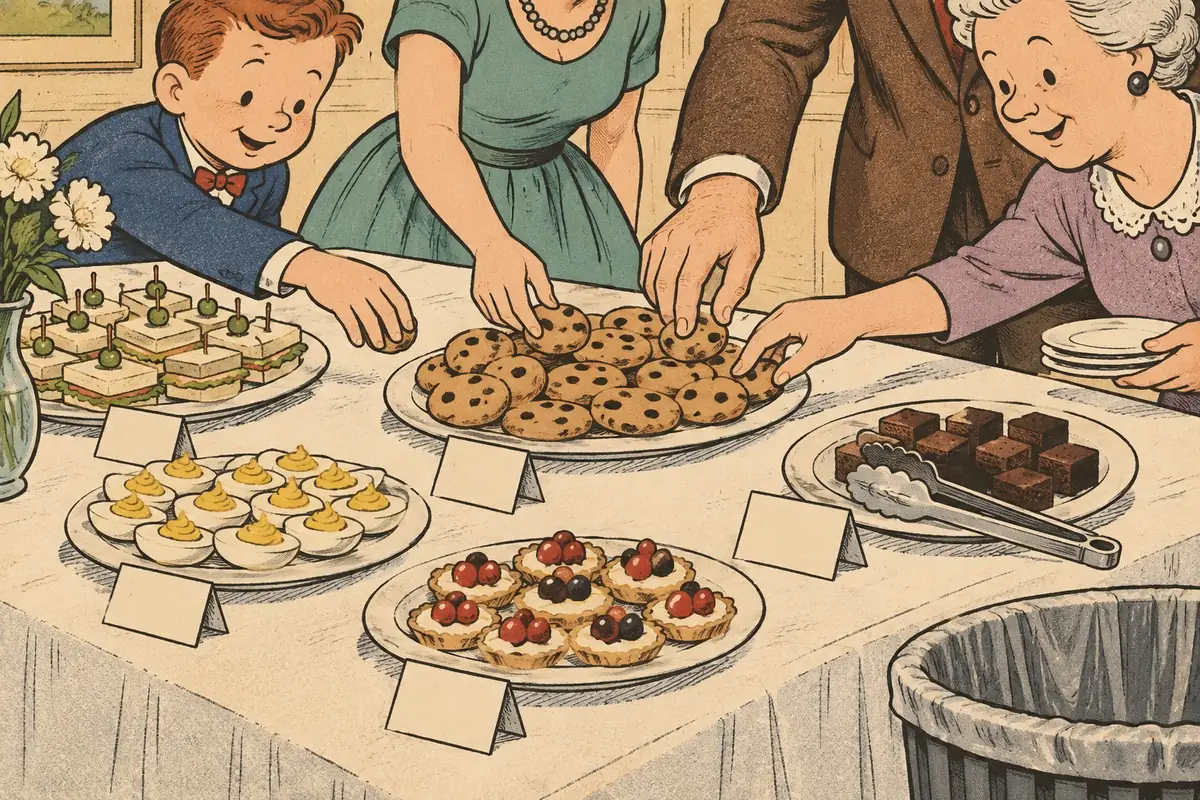
Here's how to feed people without spending the afternoon at the sink.
- Finger food only. Ask for things you can eat with your hands: cookies, bars, cut fruit, small pastries, mini muffins. No cakes that need slicing and forks, unless someone wants to bring one and serve it.
- One plate size. Small sturdy paper plates and napkins. Nobody needs a fork if everything is finger food.
- A label for every dish. Fold an index card into a tent and write the name of the dish and what's in it. Use plain tags: "contains nuts", "gluten-free", "vegetarian", "dairy-free". Ask the person who made it to fill in the card, since they know what's in it.
- Keep safe foods apart. Put the gluten-free and nut-free items on their own plate at one end of the table, with their own tongs, so crumbs don't wander.
- A trash and recycling spot. Put a lined bin right next to the dessert table and another by the coffee. People will use the one they can see.
- Something that isn't sweet. A plate of cheese, crackers or veggies helps anyone who doesn't want sugar or who has to watch what they eat.
For drinks, keep it to regular coffee, decaf, hot water with a few tea bags, and ice water. Label the decaf pot clearly; it's easy to mix them up.
Starters for a real catch-up
Some relatives jump right in. Others need a nudge. Keep a few easy questions ready for when a circle goes quiet:
- "What's something you've learned to do this year?"
- "What's the best thing you've eaten lately?"
- "What were you doing when you were the age the kids are now?"
- "Where would you go if you had a free week?"
Pair a teen with a grandparent and ask them to show each other one thing on their phone: a favorite photo, a song, a video of a pet. It gives both of them something to talk about.
Common pitfalls
- No end time. People hesitate when they don't know how long they're signing up for. Fix: put the start and end time in every invite.
- The host never sits down. Fix: do all the setup the day before, use finger food, and ask one relative to keep the coffee going for the second hour.
- Too many of the same dessert. Fix: ask people to tell you what they're bringing, and suggest fruit or savory snacks to the last few households.
- Nobody can hear. Fix: small circles of chairs, the TV off, and music kept low.
- Guests with allergies can't tell what's safe. Fix: a label on every dish, and safe foods kept on their own plate with their own tongs.