 Family Reunion Articles
All articles · Games & Memory-Making
How to Host a Family Mystery and Puzzle Night for 6 to 12
A small-group evening with a homemade mystery, a jigsaw table and snacks, set up so quiet and outgoing relatives both enjoy it.
by Ian · 5 min read
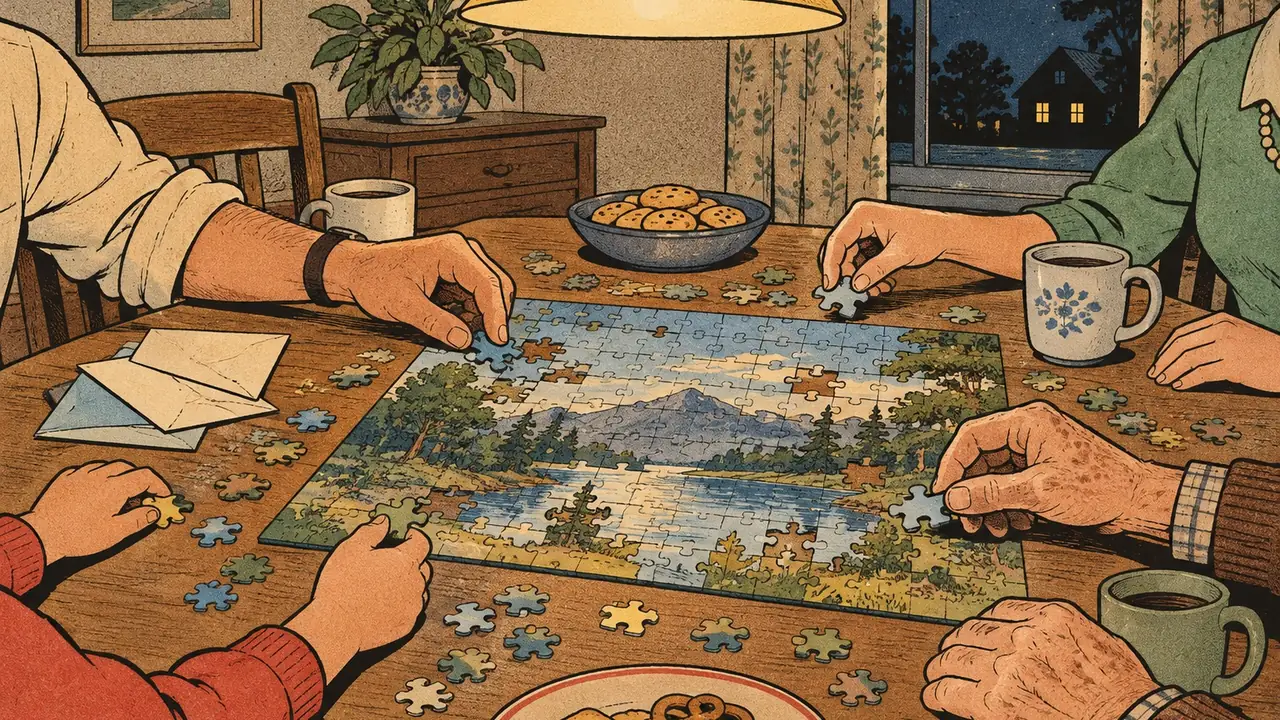
The short version
Some of the best family nights happen around one table, with a puzzle in the middle and snacks at the edge.
- Keep it to 6 to 12 people, so everyone gets a turn to talk.
- Set up two tables: a talky mystery table and a calm jigsaw table. People can move between them.
- Write a short mystery about a missing family object, with relatives as the suspects.
Nobody has to be the star. Everybody gets to be part of it.
This guide is for the relative who wants a small, cozy evening instead of a big crowd. You'll get a plan for a mystery and puzzle night for 6 to 12 people, a way to write a short family mystery yourself, and a setup that works for both the talkers and the quiet ones in your family.
Small groups are where people actually get to know each other. A shared puzzle gives everyone something to do with their hands while they talk.
Best for
- Group size: 6 to 12 people. Fewer feels thin for a mystery; more and people stop hearing each other.
- Energy level: low to medium. Mostly seated, with bursts of laughing.
- Prep effort: medium. Writing the mystery takes an evening or two.
- Budget level: low. A jigsaw, some index cards and snacks.
- Ages it suits: about ten and up for the mystery. Younger kids can help with the jigsaw or be "detective helpers" with a grown-up.
Before the day
Three weeks is enough time to write a short mystery and gather a small group. Start with the guest list, because the cap shapes everything else.
- 3 weeks out: pick the evening and cap the guest list. Decide if it's dinner and a game or just snacks and a game.
- 2 weeks out: choose your format (see below). If you're writing a mystery, pick the missing object and the suspects.
- 10 days out: ask about diets: vegetarian, gluten-free, food allergies. Plan snacks that work for everyone or label what doesn't.
- 1 week out: write the clue cards. Have a relative who isn't playing read them through and try to solve it.
- 3 days out: get a jigsaw with large pieces. Pick one on the smaller side, so the table has a real chance of finishing it in one evening.
- The day before: set up two tables with good lighting. Sort the jigsaw edge pieces into a tray to give the puzzle table a head start.
- The evening of: put the clue envelopes in order, set out snacks, and turn down any background music.
Run of show
- 6:00: people arrive. Snacks out, puzzle table open for early birds.
- 6:30: dinner or a bigger snack round, at the table or on laps.
- 7:00: the host reads the mystery's opening out loud. Hand out character cards. Five minutes.
- 7:05 to 7:45: clue rounds. Every 10 minutes, the host opens a new clue envelope and reads it out. Players talk it through.
- 7:45: dessert break. The jigsaw table fills up while people think.
- 8:00: each player or pair makes one guess: who did it and why.
- 8:15: the host reads the answer and explains how the clues pointed to it.
- 8:20 to 9:00: open time at the puzzle table. Take a photo of the puzzle, finished or not.
The photo at the end matters more than the finished puzzle. A half-done jigsaw with everyone's hands on it is the picture people keep.
Pick the right format for your group
Three formats work well for small groups. You can run one, or two at once.
- A homemade mystery. Good for families who like to talk and argue it out. Everyone plays a part, and it's personal, because it's about your family.
- An escape-room-style box. A boxed game where players solve linked puzzles to "open" the last step. Good for problem solvers. Read the box before you buy, so you know whether it can be played again or only once.
- A jigsaw table. Good for relatives who'd rather listen than perform, and for anyone who wants to drift in and out. No rules to learn, and it's easy to join late.
The two-table setup is the best of both. Put the mystery at the main table and the jigsaw at a side table a few steps away. Nobody has to choose one side forever. Shy cousins often start at the puzzle and end up shouting guesses at the mystery.
Write your own family mystery
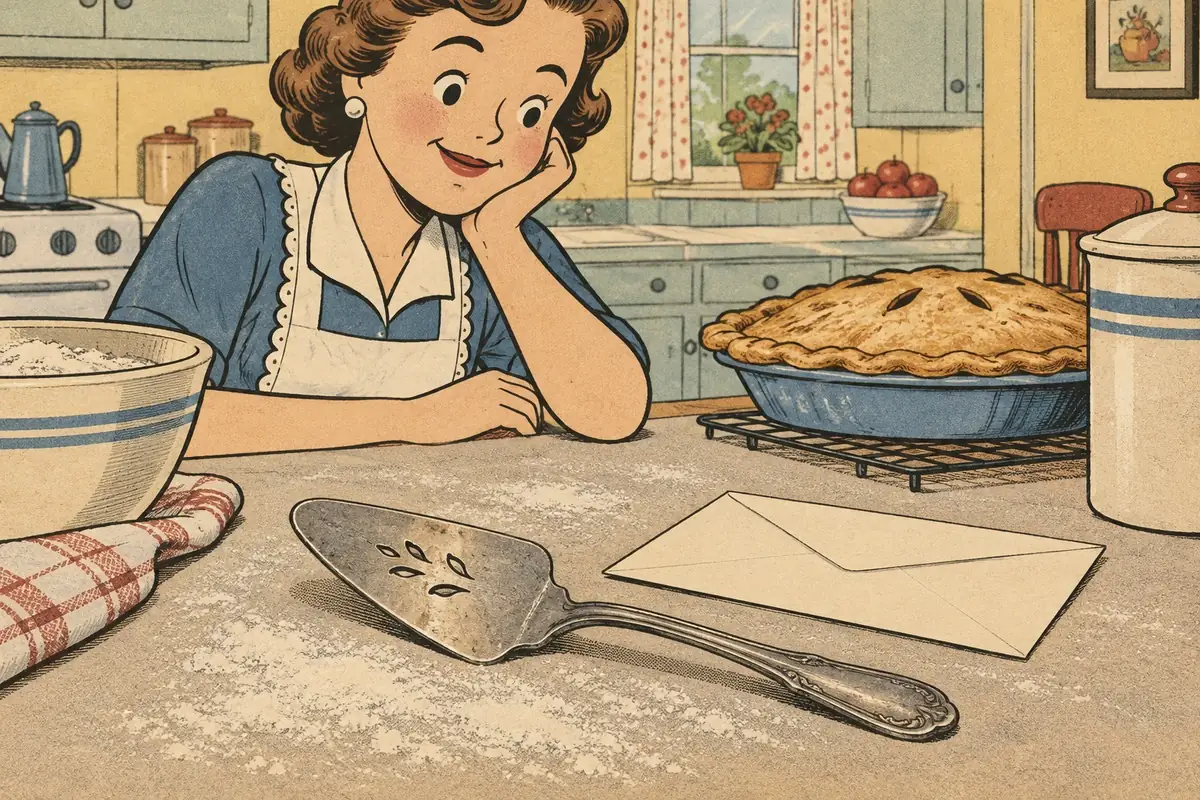
A homemade mystery doesn't need a crime. It just needs something missing, some suspects and a trail of clues. Here's a simple shape.
The setup. Pick a real family object that "went missing," like Grandma's pie server, an uncle's lucky fishing hat or the good serving spoon. Write a short opening, about 100 words, for the host to read: when it was last seen and why it matters.
The suspects. Make one character card per player. Each card gives the player a role (themselves, or a funny version of themselves), one thing they were doing that afternoon, and one small secret that makes them look guilty. Only one person really did it.
The clues. Write four clue envelopes, one per round:
- A clue that rules out two suspects.
- A clue about the time it went missing.
- A clue about where it was found, like flour on the hat or a crumb trail.
- A clue that points to the real reason someone "took" it.
The answer. Make the reason sweet or silly, never mean. Maybe someone hid the pie server to make sure Grandma brought the pie again next year.
Test it. Have one relative who won't be playing read all the clues. If they can't solve it, add a hint to clue four.
Make it work for everyone
- Hearing: read every clue out loud, and pass the card around so people can read it too. Keep music off during clue rounds.
- Sight: large-piece jigsaws and bright lamps at both tables. Write clue cards in big, dark letters.
- Mobility: chairs with arms, and a clear path between tables.
- Kids: let younger kids hold the clue envelopes and open them on cue.
- Relatives who can't travel: call them on a video call app for the clue rounds and give them a character card ahead of time.
Common pitfalls
- One loud player takes over. Fix: each player or pair gets one guess, made in turn, and the host asks quieter players first.
- The mystery is too hard. Fix: test it on a relative who won't play, and keep a spare hint ready.
- The jigsaw is too big to finish. Fix: a smaller, large-piece puzzle, with edges sorted the day before.
- The secret hits a sore spot. Fix: keep every secret light. Skip real family tension.
- The room is too dim or noisy. Fix: lamps at both tables, music off for the clue rounds.