 Family Reunion Articles
All articles · Outings & Activities
How to Plan a Family Volunteer Morning, Then Lunch
Plan a family volunteer morning: pick a project for every age, book the site, run a timed plan, then share lunch together.
by Ian · 5 min read
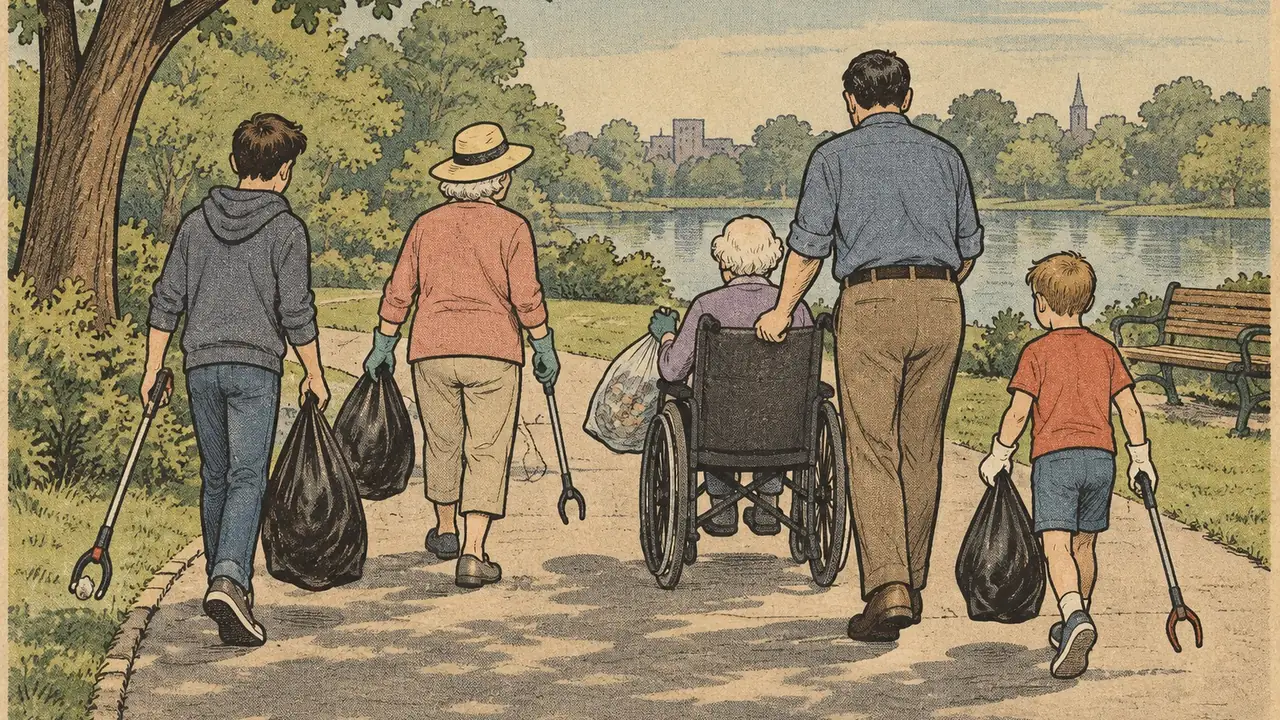
The short version
Want a reunion day that's about more than the food? Try a service morning, then lunch.
- Pick one project with room for every age, like a park cleanup or sorting donations at a food bank.
- Call the site's volunteer coordinator a month ahead and ask about ages, forms and seated jobs.
- Keep the work to about two hours, with a water break in the shade halfway through.
Then go eat together and let each crew tell what they did.
Working side by side is one of the easiest ways to get relatives talking. This guide is for whoever wants the family to spend a reunion morning doing something useful together, and then eat. You'll get a way to choose a project that fits every age, a checklist with lead times, a timed plan for the morning and lunch, and the mistakes worth skipping.
Best for
- Group size: 6 to 30 people. Past about 10, split into crews of 4 to 6.
- Energy level: Medium. There's standing, bending and some walking, with seated jobs for anyone who wants one.
- Prep effort: Medium. Most of it is one good phone call to the site and a clear sign-up.
- Budget level: Low. Lunch is the main cost, plus gloves and water if the site doesn't supply them.
- Ages: Set by the site. Ask the coordinator for the youngest age they take for hands-on work. Smaller kids may still come along if the site agrees and a parent stays with them.
Before the day
- 6 weeks out: Pick the kind of project. Outdoor cleanups, food bank sorting, a community garden workday and a charity walk all work for mixed ages. Settle the date with the family.
- 5 weeks out: Call the site's volunteer coordinator, the person who schedules helpers. Ask how many people they can take, the youngest age they allow, what to wear, whether there are seated jobs, and how far parking and restrooms are from the work.
- Same call: Ask whether volunteers fill out a form ahead of time, and whether kids need a parent's signature. If they do, get the forms early so nobody's filling them out on the hood of a car.
- 4 weeks out: Invite the family. Ask each household for a headcount, the kids' ages, and anything you should plan around: a bad knee, hearing trouble, food allergies.
- 2 weeks out: Confirm your numbers with the coordinator. Book a lunch spot close to the site, or plan a picnic, and check that it has a step-free entrance and vegetarian and gluten-free choices.
- 1 week out: Make the crews (see below). Name one adult as the comfort lead. That person carries water, sunscreen, a basic first-aid kit and snacks, and calls the breaks.
- 2 days out: Send the plan: meeting time and spot, what to wear (closed shoes, layers, a hat) and what to bring.
- Night before: Check the weather. Pack gloves, refillable water bottles, sunscreen, a few folding chairs, trash bags if the site asked you to bring them, and name tags in each crew's color.
Run of show
This example is a Saturday park cleanup. Shift the times to fit your site's hours.
- 8:30 Meet at the parking area. Hand out name tags and water. Sunscreen goes on now, not later.
- 8:45 The coordinator gives the safety talk. Ask everyone to stand close, and have a teen type the key points into the family group text for anyone who didn't catch them.
- 9:00 Work block one. Crews head to their spots.
- 10:00 Fifteen-minute break in the shade. Everyone sits and drinks water. Older relatives can take a longer heat break, and nobody has to go back out.
- 10:15 Work block two. Let people swap jobs inside their crew if they're tired or bored.
- 11:15 Stop. Return tools, tie off bags and wash hands.
- 11:30 Take a wide photo of the crews with what they collected or packed, then head to lunch.
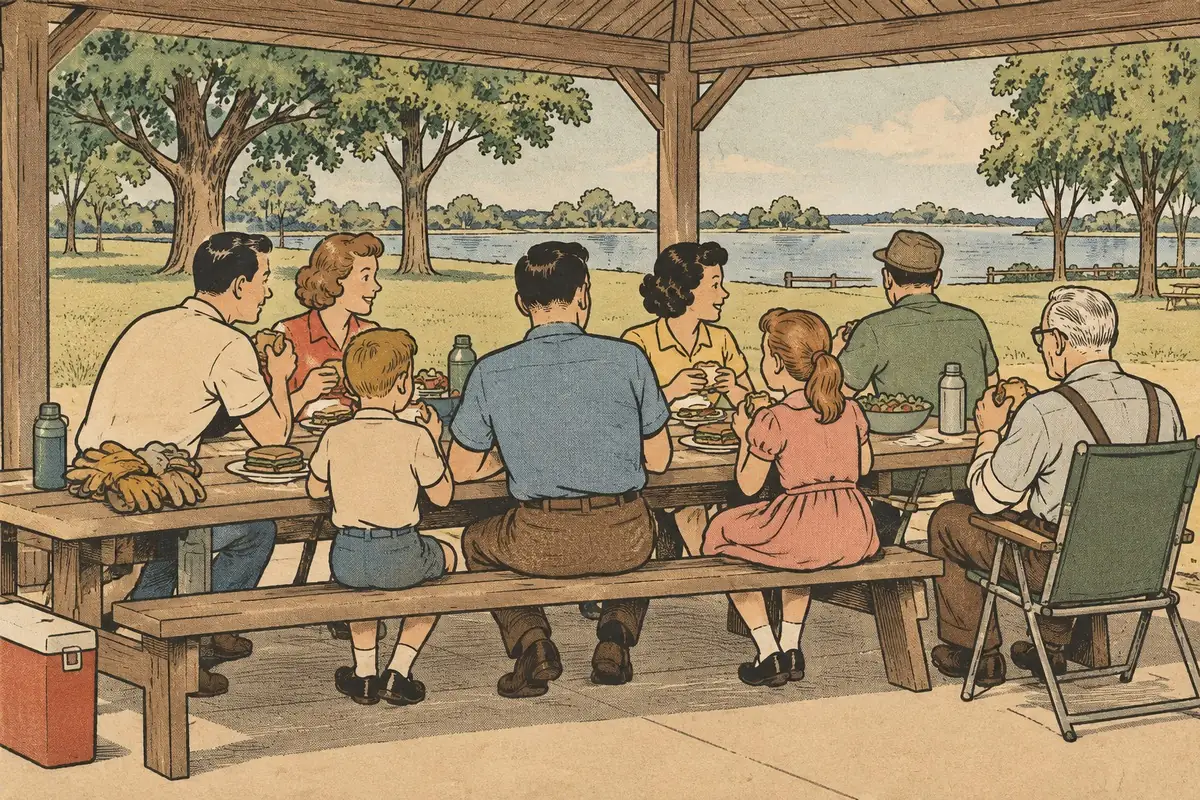
- 12:00 Lunch. Each crew tells the table what it did.
- 1:30 Head home, or on to the next reunion event.
Matching the job to the person
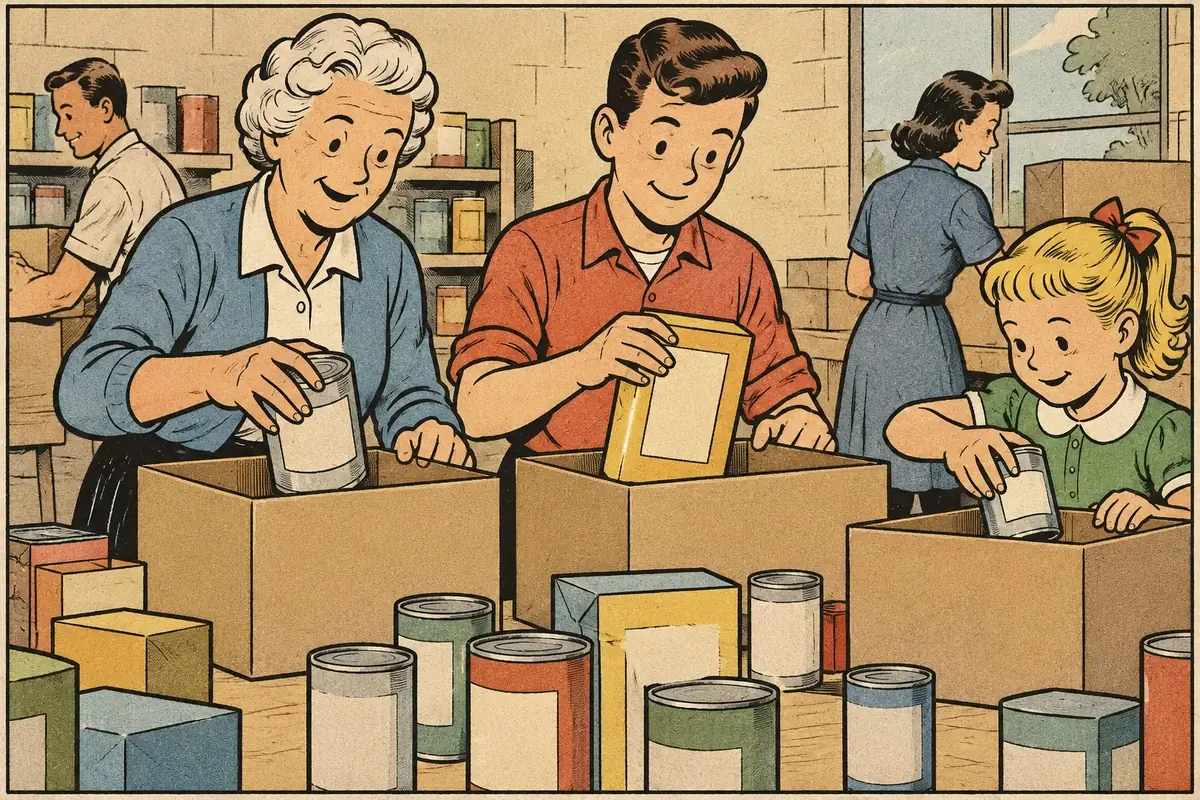
The trick is to give everyone a real job, not a pretend one. Here's what tends to fit.
- Teens: Anything with a goal and a bit of freedom. Give them a stretch of trail or shoreline and a target number of bags, or put them on the loading crew at a food bank. They're also good at handling the photo and the group text.
- Adults: The heavier work, like lifting boxes, raking and hauling bags, plus most of the crew lead roles.
- Active seniors: Sorting, checking dates on cans, packing bags, weeding raised beds, or leading a crew. Plenty of grandparents can out-walk the teens, so let them choose.
- Younger kids: Working right next to a parent. Picking up small litter with a grabber, holding the bag, or counting cans into a box are all good jobs.
- Anyone who'd rather sit: A sorting table, the sign-in table, the water station, or running the lunch plan. Ask the coordinator ahead which seated jobs exist, so nobody has to ask on the day.
- Anyone with hearing trouble: Pair them with a crew lead who repeats the instructions face to face.
- Relatives who can't travel: Give them the same morning in their own town. They pick up litter on their street or drop off donations near them, send a photo, and join lunch by phone or video call.
Building the crews
Mix each crew across ages. A simple rule: one crew lead, one teen, one older relative, then fill in with everyone else. Split up households when you can. The point is for the cousins and the aunts to work next to people they don't see every week.
Give each crew one job, one place and a stop time. Crew leads check in with the comfort lead at the break. If someone's flagging, the lead moves them to a seated task without making a thing of it.
On a cleanup, set one firm rule: nobody picks up broken glass, needles or anything that looks dangerous. Mark the spot and tell the site staff.
Common pitfalls
- Too many people for the site. Thirty people at a pantry set up for twelve means a lot of standing around. Fix: give the coordinator your real number, and split across two shifts or two sites if you need to.
- Working through the heat. Fix: book the earliest slot you can, keep work blocks to an hour, and hold the break in the shade even when people say they're fine.
- Forms on the day. Fix: collect any forms a week ahead and bring spare copies.
- A loud lunch spot. Anyone with hearing trouble misses the stories. Fix: ask for a corner table or a side room, or picnic at the park.
- Kids with nothing to do. Fix: give them a job they can count, like bags filled or cans sorted, and let them report the number at lunch.
Two hours of work and a long lunch is plenty. Keep it small the first time, and see who asks to do it again.