 Family Reunion Articles
All articles · Backyard & Home
Heritage Recipe Potluck: Food With a Family Story
Turn a family potluck into a recipe archive: one signature dish per branch, a recipe card with its origin story, and clear diet tags.
by Ian · 5 min read
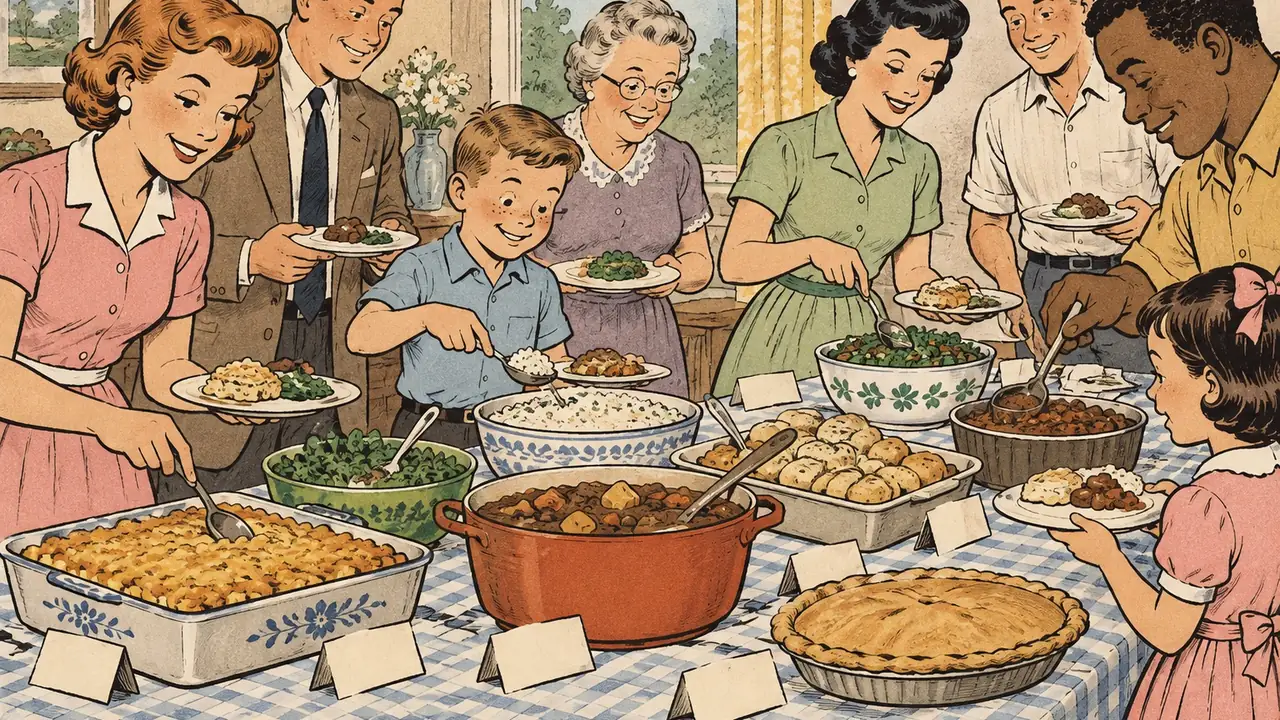
The short version
Somebody in your family makes the dish everyone asks for, and nobody else knows how. This is the year to write it down.
- Ask each branch to bring one signature dish and a card saying where it came from.
- Tag every dish: vegetarian, gluten-free, and what it contains, so everyone can eat safely.
- Save story time for dessert, when the food's already on plates and people can listen.
This guide is for whoever's organizing the family potluck and wants the food to carry the family's stories, not just fill plates. You'll get a sign-up plan, a recipe card each cook fills in, a simple set of diet tags, and a way to keep the recipes long after the dishes are washed.
Best for
- Group size: 12 to 60 people, with one dish per household or branch.
- Energy level: low to medium. Lots of eating, talking and going back for seconds.
- Prep effort: medium for the organizer, low for each cook.
- Budget level: low. Each household covers its own dish.
- Ages: all ages. Kids can make the table cards, teens make good interviewers, and the oldest cooks are the stars.
Before the day
- 5 weeks out: Ask each household or branch to pick one signature dish, one with a story. Keep a shared sign-up list so you don't end up with six potato salads.
- 4 weeks out: Send the recipe card (below) so cooks have time to ask an older relative how it's really made.
- 3 weeks out: Check the balance: mains, sides, desserts, and at least two dishes each for vegetarian and gluten-free guests. Fill gaps by asking a specific cook.
- 2 weeks out: Ask who has food allergies, and with their OK, tell the cooks.
- 1 week out: Gather serving spoons (one per dish), folded table cards, extension cords for slow cookers, coolers and ice.
- The day before: Cooks fill in their recipe cards. Have blank spares on the day for anyone who forgets.
- Morning of: Set up the tables in serving order (see "Laying out the table").
Run of show
This plan runs from noon to 3 p.m.
- 11:30 a.m. Cooks arrive, set down their dishes, and put a recipe card and table card in front of each one.
- 12:00 p.m. Everyone arrives. Fifteen minutes to walk the table and read the cards.
- 12:15 p.m. A short welcome. Guests with allergies and other food needs go through the line first.
- 12:20 p.m. Everyone eats.
- 1:00 p.m. Dish stories over dessert. Each cook gets one minute: what it is, who made it first, and one memory.
- 1:30 p.m. Recipe swap. People photograph the cards they want to keep.
- 2:00 p.m. Interview corner. Teens sit with the oldest cooks for five minutes each.
- 2:45 p.m. Leftovers get packed and labeled with the dish name.
- 3:00 p.m. Done.
The recipe card
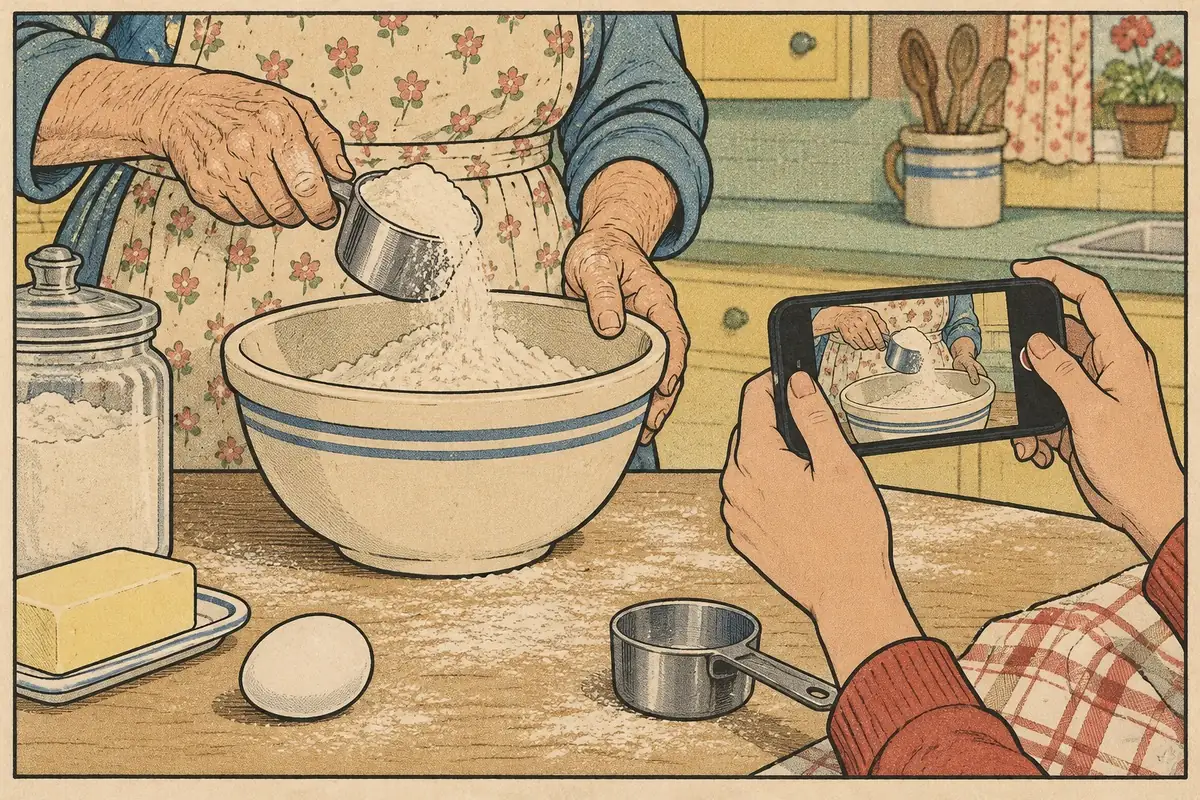
Each cook fills in one card. Keep it to one page so it gets done.
- Dish name, and what the family calls it, if that's different.
- Who made it first, as far back as anyone knows, by role: "Great-grandma on Dad's side."
- Where it comes from: a country, a region, a hometown, or a neighbor who shared it.
- When the family makes it: holidays, birthdays, Sunday dinners, the first cold night of the year.
- Ingredients with amounts. If the original says "a handful," write that and the cook's best measurement next to it.
- Steps, in order, including the one everybody gets wrong.
- Diet tags (below).
- One line of story.
The "a pinch of this" recipes are the ones most worth saving and the hardest to write down. Ask the cook to measure next time they make it, or send a helper to watch and take notes. Watching beats asking, because a good cook often doesn't know what they do by feel.
Diet tags everyone can read
Use the same short tags on every table card, so guests don't have to ask about each dish.
- V, vegetarian: no meat or fish.
- VG, vegan: no animal products at all, including eggs, dairy and honey.
- GF, gluten-free: no wheat, barley or rye, and nothing cooked in the same oil or pan as breaded food.
- DF, dairy-free: no milk, butter, cheese or cream.
- Contains: list the common allergens in the dish, such as milk, wheat, nuts, peanuts, eggs, fish, shellfish, soy or sesame.
Ask cooks to keep the package of any store-bought ingredient, like a sauce or broth, so a guest can read the label. The tags are the cook's word, not a promise. Guests with a serious allergy should talk to the cook directly. When a guest tells you about an allergy, believe them.
Laying out the table
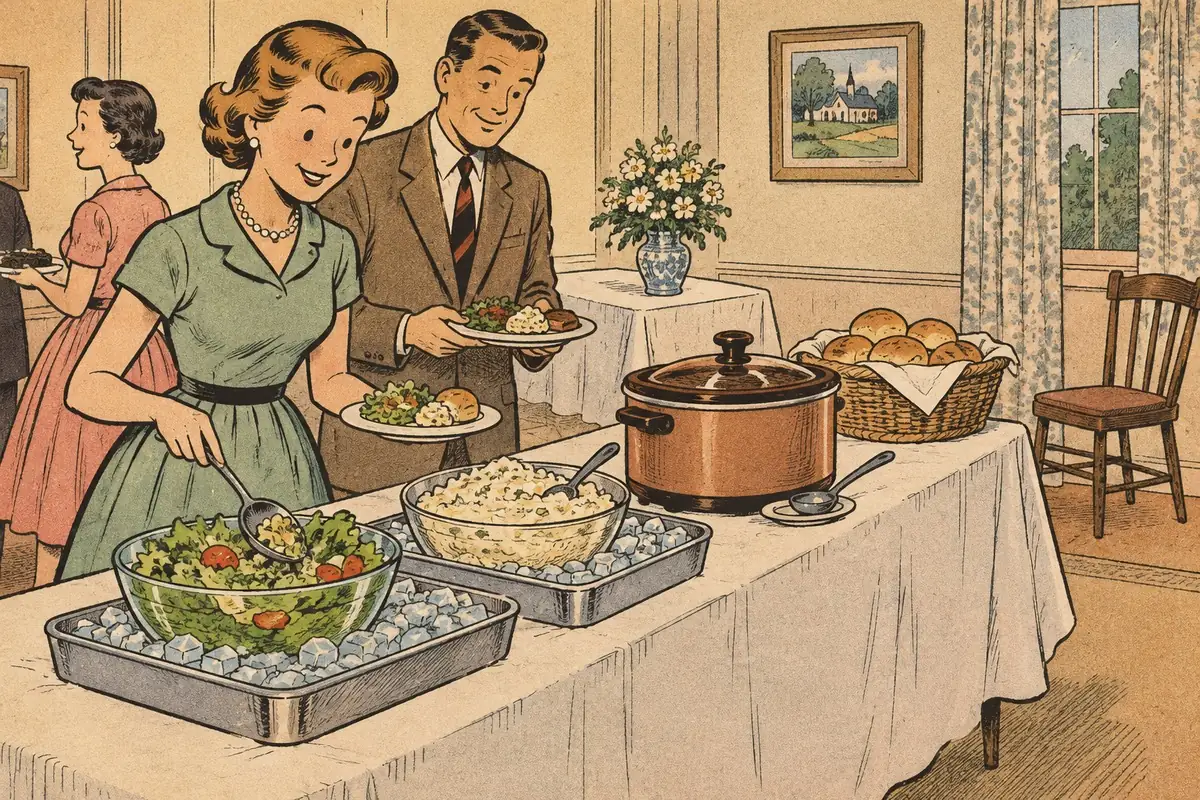
- Put the dishes without common allergens at the front of the line, and nut dishes at the end.
- Give every dish its own spoon, and remind people not to swap them.
- Keep gluten-free dishes away from the bread basket and the crumbs.
- Keep hot dishes on low in slow cookers and cold ones on trays of ice. Put food away once the meal is done.
- Set out chairs near the table, and ask a helper to serve for any cook who can't stand for long.
- Leave room around the table for a walker or wheelchair, and offer to carry plates for anyone who needs a hand.
Building the family archive
After the potluck, collect the cards in one place. Ask a cousin who types fast to put them into one document the family can share, keeping each cook's story line. Take a photo of each card next to its dish. If an older cook agrees, record them on a phone while they make the dish; you'll learn things that never make it onto a card. Relatives who can't travel can still send a card, and someone else can cook their dish in their name.
Common pitfalls
- Six potato salads. Fix: a sign-up list, checked three weeks out.
- Nothing for vegetarian, gluten-free or allergy guests. Fix: at least two dishes for each need, and those guests go first.
- The cards never get written. Fix: send them early, and have a teen fill one in while the cook talks.
- The recipe can't be followed. Fix: write down the cook's best guess, then watch them make it.
- Stories get lost in the noise. Fix: tell them over dessert, gather everyone close or use a microphone, and have each cook face the room.
- The cook who can't travel misses the stories. Fix: call them on your family's video call app at dessert, so they can tell their dish's story themselves.