 Family Reunion Articles
All articles · Outings & Activities
Park Pavilion Picnic and Easy Walk for a Big Family
Why a park pavilion beats hosting at home for a big family, when to book it, how to pack coolers, and a short walk every age can finish.
by Ian · 6 min read
The short version
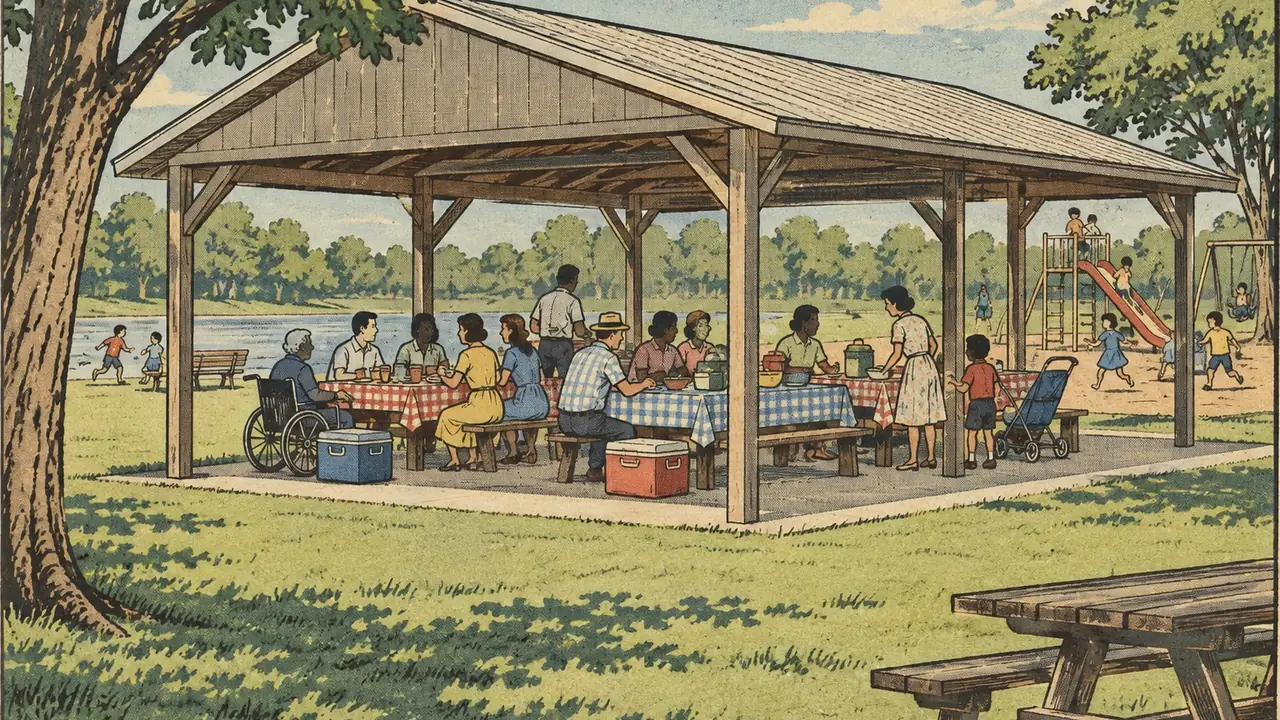
When the family outgrows everyone's living room, a covered park pavilion gives you room, shade and restrooms, and nobody has to clean their house.
- Book early, and ask the park how far ahead its pavilions fill up on summer weekends.
- Pack one cooler just for drinks, so the food cooler stays shut and cold.
- Walk in two groups after lunch: an easy stroll on a paved loop and a longer one, back at the same time.
This guide is for the organizer whose family has outgrown anyone's living room. You'll get the case for a park pavilion, when to book and what to ask, how to pack coolers so food stays cold until lunch, and a nature walk that every age can finish.
Best for
- Group size: 25 to 100 people, depending on the pavilion.
- Energy level: medium. Kids run, adults visit, and anyone who wants to can take the walk.
- Prep effort: medium. The big task is booking early; the rest is packing.
- Budget level: low to medium. Food is shared; ask the park whether reserving the pavilion costs anything.
- Ages: all ages, as long as the walk is short and paved.
Why a pavilion beats hosting at home
A home reunion puts all the work on one household: cleaning before, hosting during and cleaning after. A pavilion spreads it out. You get a roof for sun and rain and picnic tables for a crowd, and many parks have restrooms and a playground close by. It's neutral ground, too, so no branch of the family feels like a guest at another branch's house.
The trade-off is that you bring everything in and take everything out. That's what the checklist below is for.
Before the day
- 3 to 6 months out: Pick two or three parks. Find out whether their pavilions take reservations and how far ahead booking opens, because it varies from park to park.
- 2 to 3 months out: Book the pavilion and keep the confirmation. Ask the park the questions in the next section.
- 6 weeks out: Send the invite. Ask for RSVPs, food needs (vegetarian, gluten-free, allergies) and whether anyone needs a seat close to parking.
- 4 weeks out: Walk the park yourself, or ask a relative who lives nearby. Find the paved loop, the benches, the restrooms, the accessible parking and a good turnaround point. Time the loop at a slow pace.
- 2 weeks out: Assign food and coolers by household, and pick a grill person if grills are allowed.
- 3 days out: Check the weather and settle the rain plan.
- The day before: Freeze water bottles, buy ice, and pack the kit: tablecloths with clips, trash bags, wipes, paper towels, sunscreen, bug spray, a first-aid kit and a folding wagon or cart.
- Morning of: Send an early crew to set up and to be easy to find.
Questions to ask the park
- How many people does the pavilion hold, and how many tables does it have?
- Does it cost anything to reserve, and how far ahead does booking open?
- Is there electricity, running water and a grill?
- How close are the restrooms, and are they accessible for a wheelchair?
- How far is accessible parking from the pavilion?
- What are the rules on alcohol, music speakers, decorations and tents?
- What time can you arrive, and when do you need to be out?
- What happens if it storms?
Run of show
This plan runs from 11 a.m. to 4 p.m.
- 10:00 a.m. Setup crew arrives: tablecloths clipped down, coolers in the shade, a bright tablecloth or flag so the family can spot you.
- 11:00 a.m. Arrivals. Drinks out, kids to the playground with an adult nearby.
- 12:00 p.m. Lunch. Guests with food allergies and other food needs serve themselves first.
- 1:00 p.m. The easy walk, in two groups (below).
- 1:45 p.m. Everyone back. Dessert, the group photo and a video call to the relatives who couldn't come.
- 2:30 p.m. Free time: lawn games, naps in the shade, old stories.
- 3:30 p.m. Cleanup. Every household has a job, from trash to tablecloths.
- 4:00 p.m. Pavilion clear before your end time.
Cooler logistics
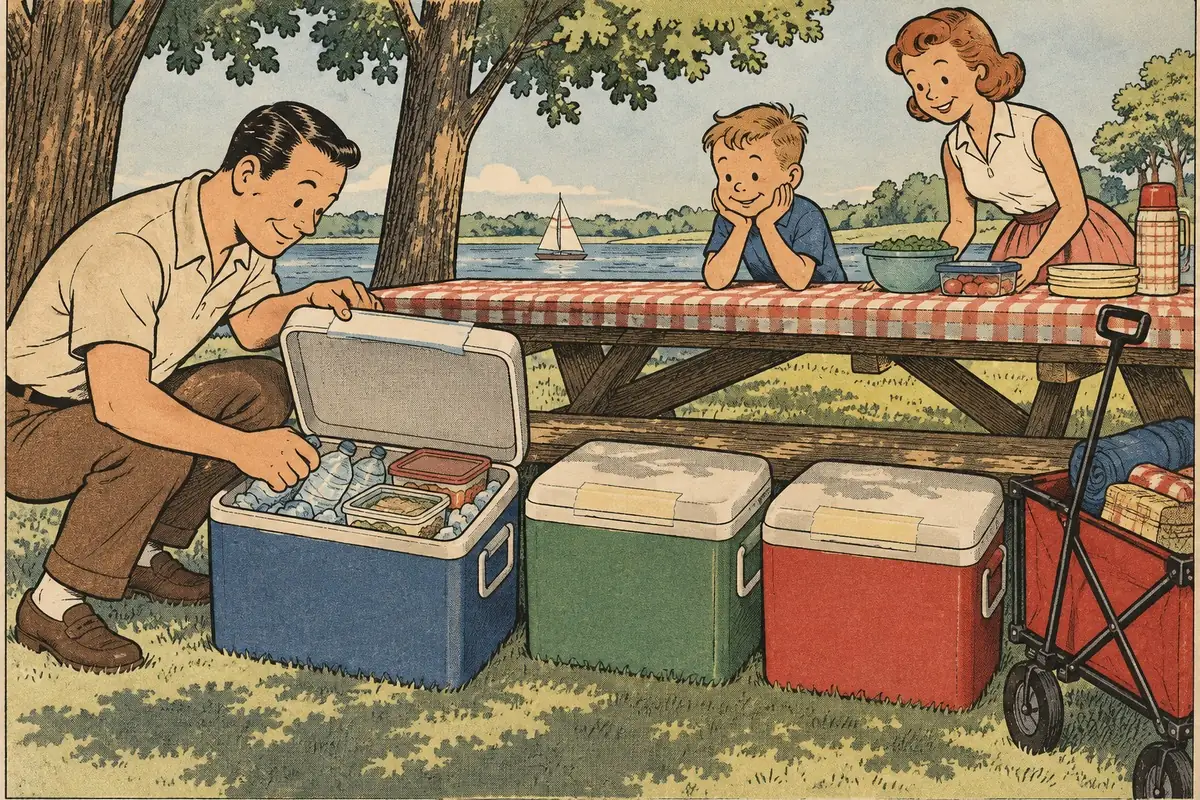
Food in a cooler stays cold longer when the lid stays shut. So the main rule is simple: keep drinks in their own cooler. People open the drink cooler all day, and the food cooler only at mealtime.
- Keep the coolers indoors overnight, not in a hot garage or car, before you pack them.
- Put frozen water bottles or block ice on the bottom and fill the gaps with cubes. The bottles turn into drinking water later.
- Pack in reverse order: what you eat last goes in first.
- Seal raw meat and put it at the bottom of its own cooler, away from ready-to-eat food.
- Keep coolers under the tables or in the shade, never in the sun.
- Mark each cooler with a strip of tape saying what's inside, so nobody digs through all three.
- Use a wagon or cart from the car to the pavilion. No relative should carry a full cooler across a field.
- After lunch, leftovers go back on ice right away.
The easy walk
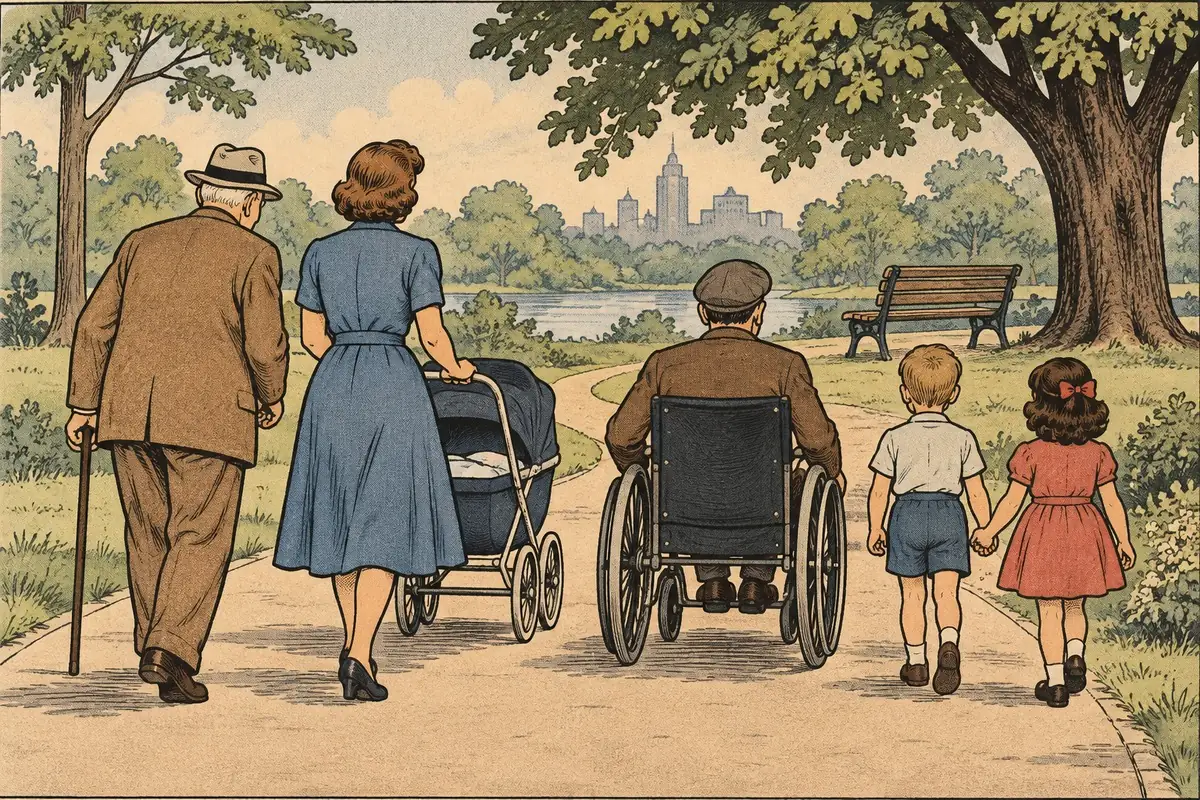
A short walk after lunch lets people move, talk and see something besides the picnic table. The trick is to make it something everyone can do.
- Pick a paved or firm, flat path, about 20 to 30 minutes at a slow pace, with benches along the way.
- Walk in two groups. The easy stroll is for strollers, wheelchairs, canes and anyone who wants to take it slow. A longer loop is for the energetic ones. Both groups agree on the same return time.
- Give each group a leader in front and a sweep at the back, an adult who always walks last so nobody gets left behind.
- Name a turnaround point. Anyone can head back from there without feeling they've held people up.
- Stop to talk. The leader turns and faces the group at each stop, so relatives who don't hear well don't have to catch words over a shoulder.
- Bring water and hats, and stop in the shade.
- Give the kids things to spot: a bird, a bridge, a feather, a bench with a plaque. A teen can keep the list and cheer each find. It's for fun, not points.
- Relatives who'd rather sit it out stay at the pavilion with a relative or two. Some of the best stories come out in that quiet stretch.
Common pitfalls
- Another group has the pavilion. Fix: book early and bring the confirmation.
- Family can't find you. Fix: share the pavilion's name or number ahead, and set out something bright.
- The food's warm by two o'clock. Fix: a separate drinks cooler, shade and lids shut.
- The walk is too much for some. Fix: two groups, a paved loop and a turnaround point.
- Rain or wind. Fix: clip down the tablecloths, and have a backup plan for a storm.
- Cleanup falls on the organizer. Fix: assign every household a cleanup job ahead of time.