 Family Reunion Articles
All articles · Games & Memory-Making
How to Run a Throwback Photo Wall at Your Reunion
Collect old photos ahead, number them on a board and let relatives guess who's who, with a fair answer key and story starters.
by Ian · 6 min read
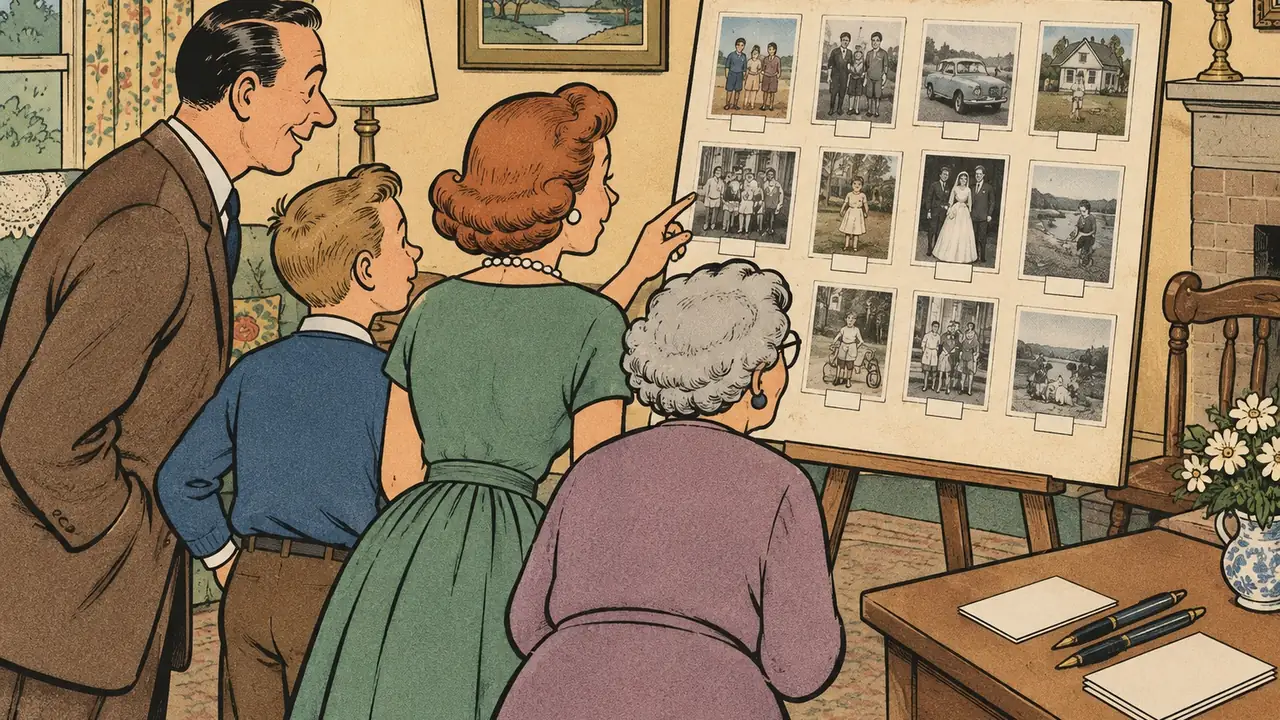
The short version
That kid with the bowl cut and the missing front tooth? Somebody at your reunion knows exactly who it is.
- Have one person collect two or three old photos from every relative, privately, so nobody peeks.
- Shuffle the numbers before you hang them, so siblings don't end up side by side and give it away.
- At the reveal, each person gets one minute to tell the story behind their photo.
This guide is for the relative who wants a game that gets the whole family talking, not only the loud ones. You'll get a plan for collecting old photos ahead of time, a numbering and answer-key method that keeps the guessing fair, and story starters that turn each photo into a few minutes of family history.
Best for
- Group size: 15 to 80 people. The more photos, the better it works.
- Energy level: low and social. People wander up to the board between other things.
- Prep effort: medium, and almost all of it falls on one person over a few weeks.
- Budget level: low: prints, a board, tape and pens.
- Ages: about 8 and up can guess on their own; younger kids play in pairs with an adult. Older relatives tend to shine here, because they know the most faces.
Before the day
- 6 weeks out: Pick one collector. That person is the only one who sees who sent what.
- 5 weeks out: Ask every relative for two or three photos of themselves: childhood, teen years or an old trip. Ask each household privately, not in a family group chat where everyone can see the photos. Set a deadline two weeks before the reunion.
- 4 weeks out: Send one reminder. If a relative only has paper prints, ask a family member nearby to take a clear, straight-on photo of each one, so the original never leaves the house.
- 2 weeks out: Deadline. The collector numbers the photos and fills in the answer key (below).
- 10 days out: Print the photos, about postcard size. Make guess sheets, including a few in large print.
- The day before: Mount the photos on a foam board or a bare wall with painter's tape, which peels off without damage.
Run of show
The wall runs alongside a reunion afternoon, with one set time for the reveal.
- 12:00 p.m. Board up near the entrance. Guess sheets, pens and two chairs on a table beside it.
- 12:00 to 2:45 p.m. Open guessing. People fill in their sheets as they pass by, and argue about it, which is half the fun.
- 2:45 p.m. Last call. Sheets go in a basket.
- 3:00 p.m. The reveal, 30 to 45 minutes. The collector reads each number, the person in the photo raises a hand, and they get one minute for the story.
- 3:45 p.m. A show of hands for the photo that fooled the most people. The stories are the point.
- 4:00 p.m. Photos come down and go into labeled envelopes.
The numbering and answer-key method
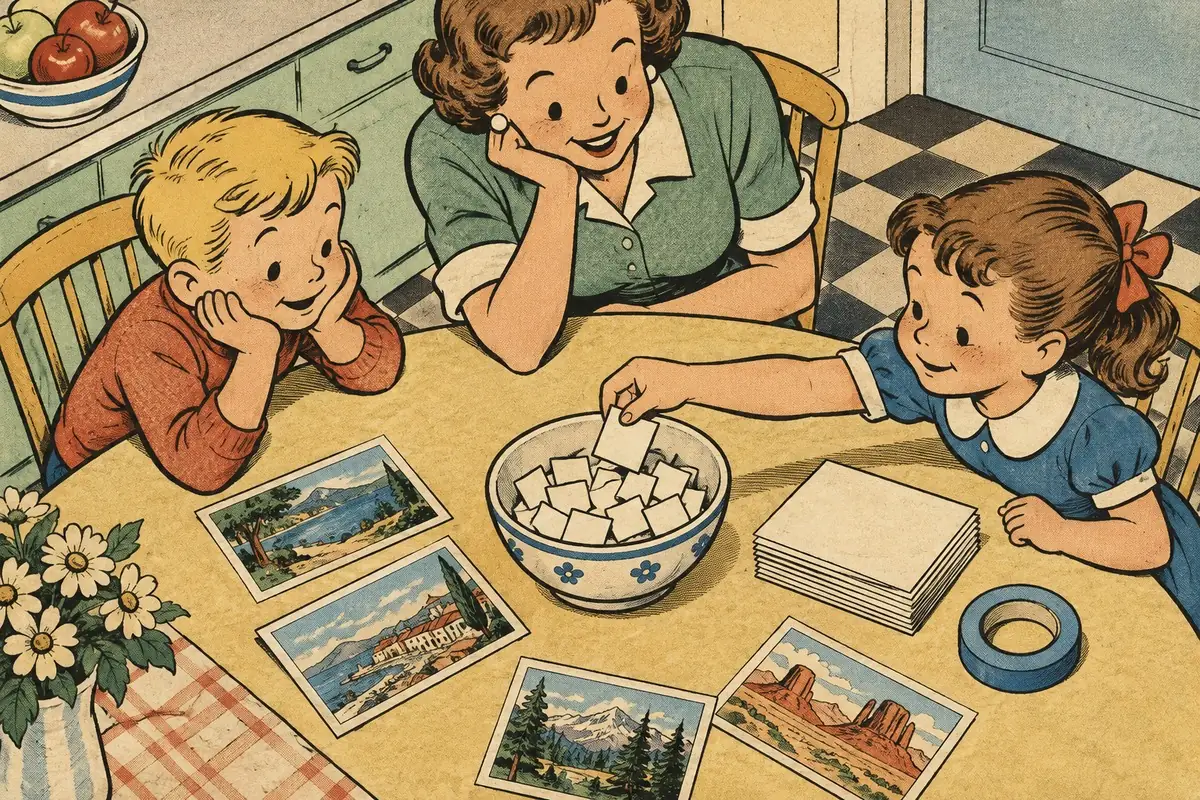
Here's the problem the method solves. If you number photos in the order they arrive, one household's photos land next to each other, and the board gives itself away. So you shuffle before you number.
- As photos arrive, save each one with a temporary name: the sender and a count, like "Aunt on Mom's side 1."
- After the deadline, write the numbers 1 up to your total on slips of paper and mix them in a bowl. Draw one slip for each photo. That's its board number.
- Fill in the answer key, one row per photo: board number, who's in it, roughly what year, where it was taken, who sent it, a one-line story, and "OK to share in the album afterward: yes or no."
- Put the number on a small tag below the photo, never written on the photo itself.
- Keep two copies of the key: one with the collector and one sealed in an envelope with a second helper, in case a phone dies or the collector gets pulled into the kitchen.
- For group photos, pick one person in the shot and ask about only that one: "Who's the kid on the left?" One guess per number keeps the sheets simple.
The guess sheet is just numbered lines with room to write a name. Leave a blank at the bottom for "The one I'm sure about," which gets people laughing at the reveal when they're wrong.
Caption prompts and story starters
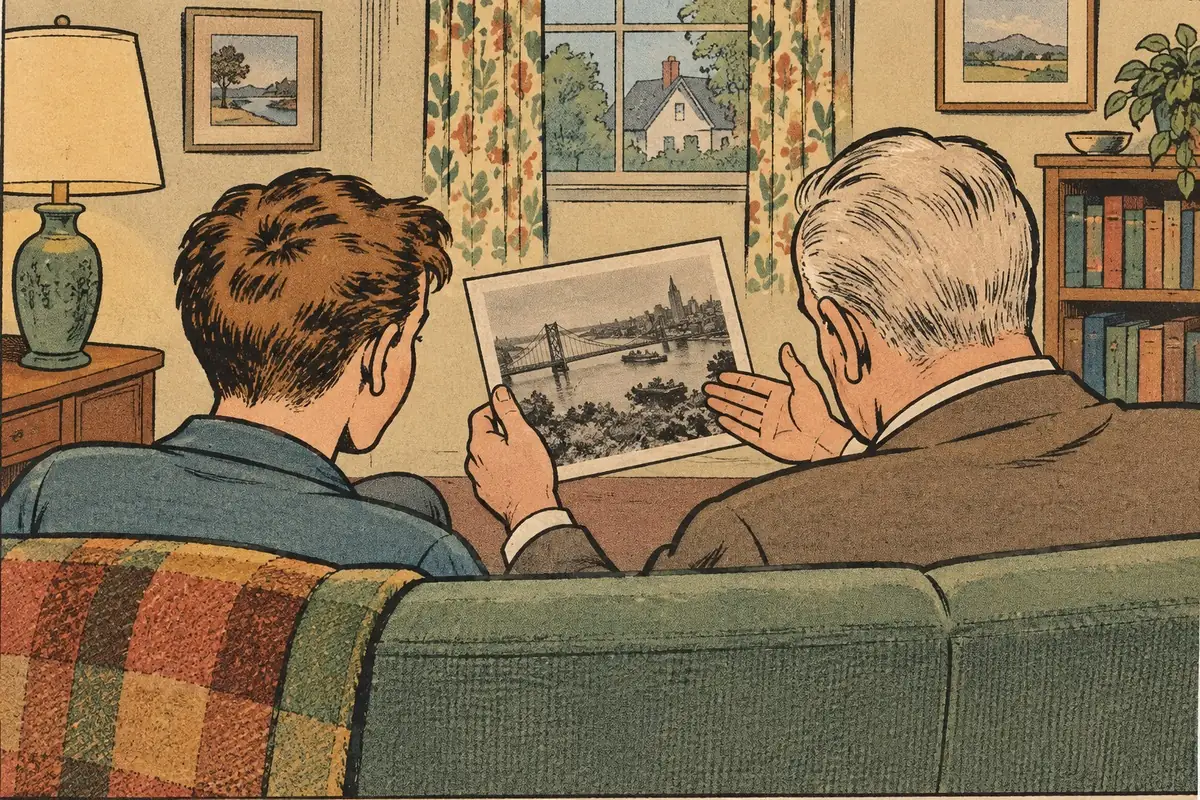
When you ask for photos, ask each sender three quick questions for the answer key:
- Where was this taken, and roughly what year?
- Who took the picture?
- What happened right before or right after?
At the reveal, some people freeze when it's their turn. Hand them a story starter on a card:
- "This was the summer we…"
- "What you can't see in this photo is…"
- "I was wearing this because…"
- "The person behind the camera was…"
- "About ten minutes after this…"
Teens make great interviewers. Before the reveal, pair a teen with an older relative and have them ask, "What did you do for fun at this age?" The teen can then introduce the photo, which takes the pressure off a shy grandparent.
Make it work for everyone
- Hearing: the collector and each storyteller face the room. Use a microphone if you have one, or gather everyone close. Repeat each number and name twice.
- Mobility: hang the board low enough to read from a chair, and let storytellers speak from their seats.
- Diet: if snacks sit on the guessing table, label each one: vegetarian, gluten-free, or what it contains.
- Relatives who can't travel: their photos still go on the board. Call them on your family's video call app at the reveal so they can tell their own story.
- Comfort: not everyone wants their awkward teen photo saved forever. That's what the "OK to share" column is for. Let people choose their own photos, and never add one someone else sent without asking the person in it.
Common pitfalls
- The board gives itself away. Fix: shuffle the numbers with slips before you hang anything.
- Photos come in late or not at all. Fix: a deadline two weeks early, one reminder, and an aunt or cousin in each branch who chases their side by name.
- An original print gets lost or damaged. Fix: work from photos of prints, and never glue, pin or write on an original.
- The reveal drags. Fix: one minute per story. With more than 40 photos, split the reveal into two shorter rounds.
- Someone feels put on the spot. Fix: ask before you share, and let them pass on the story.